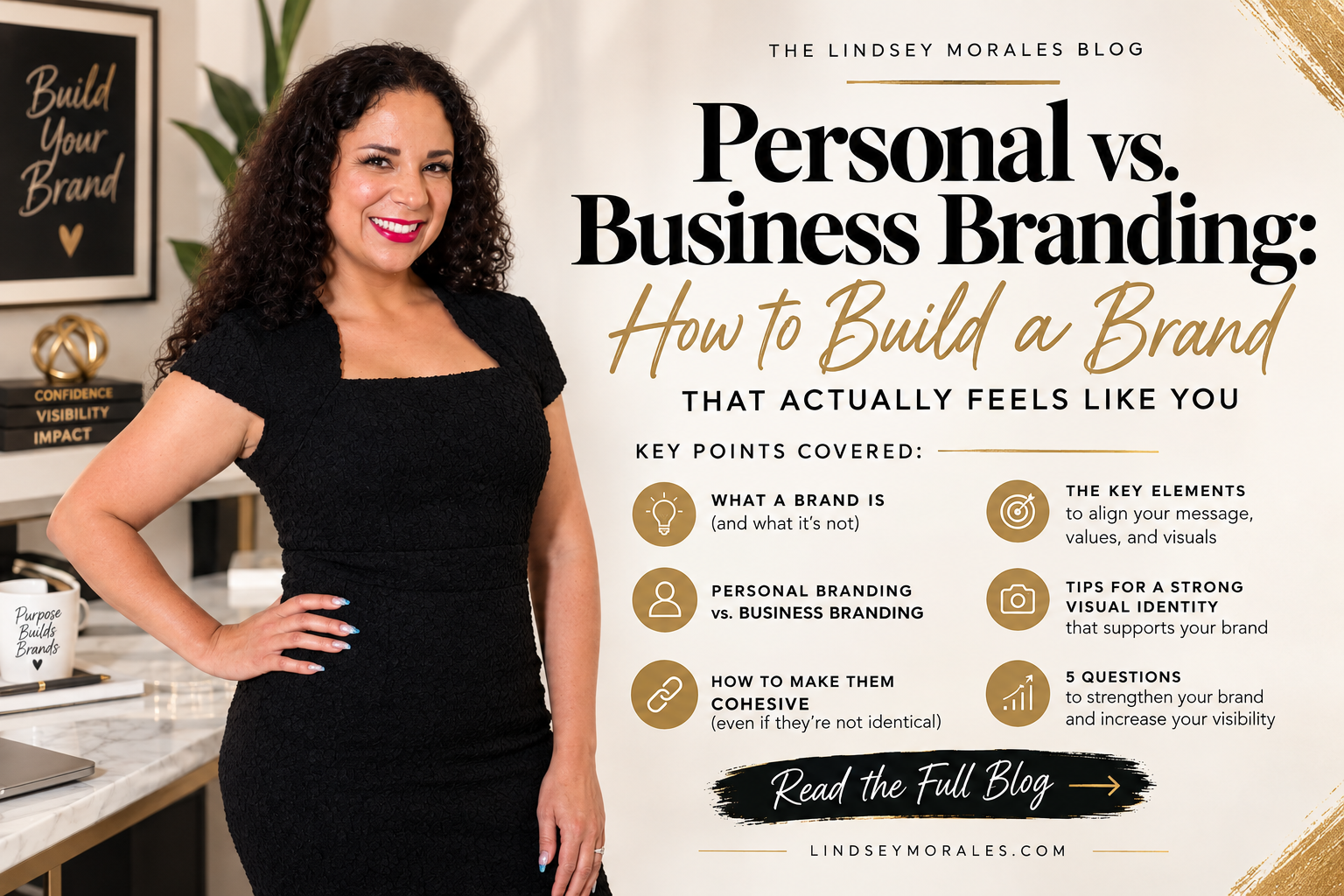
Personal vs. Business Branding: How to Build a Brand That Actually Feels Like You

Your brand is more than a logo. More than a color palette. More than a perfectly curated Instagram feed.
Your brand is the experience people have when they encounter you.
Whether you’re building a personal brand, a business brand, or both, understanding what your brand really represents can make the difference between simply being visible and being recognized, remembered, and trusted.
I’ve spent years helping entrepreneurs, creatives, coaches, speakers, models, and professionals take what they already have—their gifts, story, personality, expertise, and style—and turn it into a brand that gets noticed.
So let’s start with the basics.
What Is a Brand?
A brand is the perception, reputation, and experience people associate with you, your business, or your organization.
It’s what people think and feel when they hear your name.
Think about it this way:
Your logo is not your brand.
Your website is not your brand.
Your social media feed is not your brand.
Those are all elements of your brand.
Your brand is the bigger picture.
It’s your message. Your personality. Your values. Your expertise. Your visual identity. Your reputation. Your customer experience. Your consistency.
And perhaps most importantly, your brand answers the question:
“Why should people remember you?”
What a Brand Is NOT
Let’s clear up a few common misconceptions.
Your Brand Is Not Just Your Logo
A beautiful logo doesn’t automatically create a strong brand.
You can have the most beautiful logo in the world, but if your messaging is unclear or your customer experience is inconsistent, people won’t know what you actually stand for.
Your Brand Is Not Just Your Social Media
Social media is one place where your brand shows up—but your brand doesn’t live there.
Your emails, website, packaging, conversations, presentations, photos, events, products, and even the way you answer the phone can all contribute to your brand experience.
Your Brand Is Not Someone Else’s Brand
One of the biggest branding mistakes I see is trying to copy what is working for someone else.
You can absolutely study successful brands.
But inspiration is not imitation.
Your brand should be rooted in your own gifts, personality, story, expertise, and vision.
What works for someone else may not work for you—and that’s okay.
Your Brand Is Not About Looking Perfect
Your brand should look intentional, but it doesn’t have to look perfect.
People connect with authenticity.
Your goal isn’t to create a polished version of someone else.
Your goal is to create a clear, compelling version of you.
Personal Branding vs. Business Branding
So what’s the difference?
Personal Branding
A personal brand is centered around you as the person.
Your personality, story, expertise, values, perspective, experience, and reputation are major parts of the brand.
This can be especially powerful for:
- Coaches
- Consultants
- Speakers
- Authors
- Creatives
- Influencers
- Entrepreneurs
- Service providers
- Public figures
- Professionals building thought leadership
When people hire you, follow you, listen to you, or buy from you, they are often buying into your perspective and the person behind the expertise.
Business Branding
A business brand is centered around the company, organization, product, or service.
The business may have its own name, identity, messaging, mission, visual style, products, and customer experience.
Think of the difference between:
“I am the brand.”
and
“I am the person behind the brand.”
Neither is better.
The key is understanding which model—or combination of models—makes sense for your goals.
What If You Have Both?
This is where things get interesting.
Many entrepreneurs have both a personal brand and a business brand.
And if you’re not intentional, the two can start to feel disconnected.
For example, maybe your personal social media says one thing while your business website says something completely different.
Your personal brand feels fun, bold, and energetic—but your business brand feels stiff and corporate.
Or maybe people know you but have no idea what your business actually does.
That’s a branding problem.
The good news?
Your personal and business brands don’t have to be identical to be cohesive.
They simply need to make sense together.
How to Make Your Personal and Business Brands Cohesive
1. Define the Common Thread
Ask yourself:
What is the bigger message connecting me and my business?
Maybe you’re passionate about helping women become more confident.
Maybe your mission is helping entrepreneurs become more visible.
Maybe you’re passionate about creativity, leadership, transformation, fashion, wellness, faith, or personal development.
Find that common thread.
That becomes the bridge between your personal and business brands.
2. Know Your Brand Values
Your values should influence both brands.
If authenticity, excellence, creativity, integrity, family, faith, innovation, or service are important to you, those values should show up consistently in how you communicate and operate.
Your audience should be able to recognize what you stand for—even when they’re interacting with different parts of your brand.
3. Create Consistent Visual Language
Your personal brand and business brand don’t necessarily need the exact same colors, fonts, or logo.
But they should feel like they belong in the same family.
Consider creating consistency through:
- Photography style
- Color palette
- Typography
- Graphic design
- Website imagery
- Social media templates
- Wardrobe and styling
- Video aesthetics
Think cohesive—not cookie-cutter.
4. Align Your Messaging
Your personal brand might say:
“Here’s what I’ve learned from my experience.”
Your business brand might say:
“Here’s how we can help you solve this problem.”
Those messages can work together beautifully.
Your personal brand builds connection and credibility.
Your business brand communicates the solution.
Together, they tell a stronger story.
5. Let People See the Person Behind the Business
If your business is built around your expertise, don’t be afraid to show up.
Share your story.
Share your personality.
Share your lessons.
Share behind-the-scenes moments.
Share what you’re learning.
Share your wins—and sometimes the lessons that came before the wins.
People don’t just want information.
They want connection.
And your personality can become one of your greatest branding assets.
6. Be Consistent Without Becoming Boring
Consistency is important.
But consistency doesn’t mean posting the same thing every day or making every piece of content look identical.
It means people can recognize your voice, values, perspective, and overall brand experience.
You want your audience to think:
“Yep. That’s them.”
That’s brand recognition.
5 Questions to Strengthen Your Brand
If you’re not sure where to start, grab a notebook and answer these questions:
1. What do I want to be known for?
Be specific.
“Business” isn’t a brand position.
“Helping women turn their expertise into visible, profitable brands” is much clearer.
2. Who am I trying to reach?
You cannot effectively speak to everyone.
Get clear about who you want to serve.
3. What makes my approach different?
Your experience, personality, story, methodology, perspective, or style may be part of your differentiator.
4. What do I want people to feel when they interact with my brand?
Inspired?
Confident?
Seen?
Educated?
Energized?
Empowered?
Your desired emotional experience matters.
5. Does my current brand reflect where I’m going?
This is a big one.
Sometimes your brand is still communicating who you used to be instead of who you’re becoming.
Your brand should evolve as you evolve.
Your Brand Should Be an Amplifier—Not a Costume
One of my favorite ways to think about branding is this:
Your brand should amplify who you are, not require you to become someone you’re not.
You don’t need to manufacture a personality.
You don’t need to chase every trend.
You don’t need to completely reinvent yourself.
Start with what you already have.
Your gifts.
Your story.
Your expertise.
Your personality.
Your style.
Your experiences.
Then ask:
How can I communicate all of this more clearly and consistently?
That’s where powerful branding begins.
Because the goal isn’t simply to look like a brand.
The goal is to become a brand that people recognize, remember, trust, and want to connect with.
And when your personal brand and business brand work together?
That’s when your visibility can become much more intentional.
Ready to Build a Brand That Gets You Noticed?
You don’t have to figure it all out alone.
Whether you’re building your personal brand, growing a business, or trying to bring the two together, I’m passionate about helping entrepreneurs and creatives take what they already have and amplify it into a brand that gets noticed and remembered.
If you’re ready to become more intentional about your image, message, visibility, and brand strategy, now is the perfect time to take the next step.
Shop the Labor Day Weekend Sale and save on branding resources, offers, and support designed to help you build a brand that feels like you.

Shop the Labor Day Weekend Sale
Because your story matters.
Your gifts matter.
And your brand should make sure people can see them.
Shop the Labor Day Weekend Sale today, and let’s build a brand that feels like YOU.

Subscribe to continue reading
Subscribe to get access to the rest of this post and other subscriber-only content.